
Full Title: Stuck on Scroll: How Social Media Hijacks
Your Focus and How to Take It Back
Written By: LaTreece Ross, M.Ed., LPC
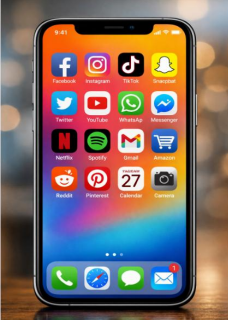
Let’s begin with a gentle truth: Most of us are one notification away from forgetting why we
walked into a room.
In a world where the average person checks their phone 144 times a day, it’s no wonder our
focus feels fragmented, our attention feels tired, and our nervous systems feel like they’re
constantly spinning. Whether it’s TikTok rabbit holes, Instagram highlight reels, Facebook
debates with strangers, or the anxious pull of the unread email badge—our brains are
quietly protesting. And underneath all of this noise sits a tender question:
What is all this screen time really doing to us?
Today, we’re talking about it—lightly, honestly, compassionately, and with just enough
humor to remind you that you’re not alone. None of us intended to become this attached to
our phones… but here we are.
The Brain: Why Your Phone Feels Like a Magnet
Our brains are beautifully wired for connection, novelty, and reward. Social media said,
“Perfect. Let’s put all three in one endless-scroll app.”
Every like, ping, video, story, or notification drops a quick hit of dopamine—your brain’s
little “Ooh, that felt good. Do it again!” chemical. Over time, your mind begins to crave the
next hit, even during moments that used to be peaceful or boring.
You might notice yourself checking your phone every few minutes, feeling restless in
silence, or struggling to focus on one thought at a time. Not because something is “wrong”
with you—but because our modern world has trained the brain to prefer constant
stimulation over patient presence.
Your brain didn’t sign up to run a 24/7 digital casino. But somehow, it’s doing its best.

The Social Side Effect: When Real-Life Interactions Feel… Awkward
We now live in a world where adults can deliver five-slide Instagram stories on
boundaries… but freeze when someone makes small talk in the checkout line.
Social media gives us time to edit, think, delete, retype, and filter our words—literally and
emotionally. Real-life communication, however, comes with pauses, facial expressions,
imperfections, and the terrifying inability to hit “undo.”
So people begin to feel “rusty.” Teens avoid eye contact. Families sit together scrolling
separately. Couples spend more time side-by-side online than face-to-face emotionally.
Technology didn’t just replace boredom. It began replacing bonding.
The Lost Art of Being Present
If we’re honest, many of us check our phones so often that our thumbs have stronger
muscle memory than our biceps. Presence takes practice. But screen time trains the brain
to expect constant input, instant responses, and endless stimulation.
This is why you might be:
- In a meeting
- On a date
- At a family dinner
- In class
- At church
…and suddenly feel the urge to “just check something real quick.”
It’s not a character flaw. It’s neuroscience—and it’s fixable.
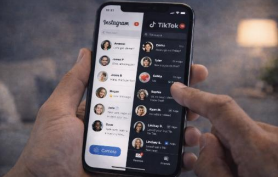
When Technology Begins to Replace Human Life
Technology was supposed to make life easier. Not rearrange our relationships, routines,
and rhythms.
Now we see:
- Teens texting each other from the same room
- Adults communicating more through emojis than full sentences
- People watching vacation moments through a screen instead of their eyes
- Families taking 20 photos before anyone eats their food
- Work following us into bed, vacations, and sacred moments
The issue isn’t that technology is bad. It’s that it quietly became the default.
And as the digital world expands, we slowly lose:
- Empathy
- Patience
- Connection
- Peace
- Rest
- Presence
- Spiritual grounding
When your phone becomes your distraction, comfort, entertainment, consultant, escape,
and constant companion…you forget how to simply be human.
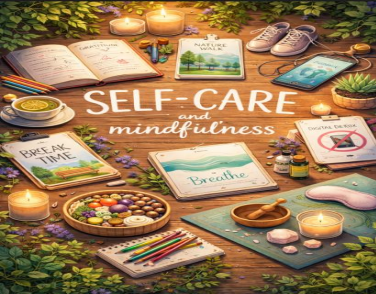
Taking Your Life Back: Gentle, Sustainable Reorientation
You don’t need a dramatic digital detox or a cabin in the woods. You need small, consistent
habits that re-train your nervous system.
The 10-Second Pause
Before picking up your phone, ask: “What am I looking for?” Information? Escape?
Connection? Habit? Boredom?
Awareness interrupts autopilot.
Phone-Free Pockets
Try small boundaries first:
- First 10 minutes in the morning
- Last 30 minutes before bed
- During meals
- Short car rides
- Before meetings
- Five minutes of silence each hour
These tiny resets create space for your brain to breathe.
Put the Phone in Another Room
Distance creates calm.
Turn Off Notifications
Your phone shouldn’t tap you every three minutes like an impatient toddler.
Set Specific Check-In Times
Choose 3–5 windows per day instead of checking 87 times.
Replace Scrolling With Sensory Grounding
Try:
- Drinking water
- Stretching
- Breathing deeply
- Journaling
- Taking a walk
- Calling a friend Your senses restore your nervous system—not your screen.
Rebuild Social Skills
Start small:
- Look at the cashier in the eyes
- Say hello
- Call instead of text
- Attend one event this month
- Practice being emotionally present
Your social confidence returns with use.
The Whole-Life Benefits of Reducing Screen Time
Emotionally: You’ll feel calmer, less anxious, more confident, and less triggered by
comparison.
Psychologically: Your memory, patience, focus, and clarity begin to return.
Socially: Conversations feel deeper, relationships strengthen, empathy expands.
Spiritually: Your inner voice becomes clearer. Your gratitude increases. Your presence
deepens.
Reducing screen time doesn’t just give you hours back— it gives you yourself back.
Reflection Questions for Your Healing Journey
1. How long do I spend on social media each time I open an app?
2. How many times do I check my phone per hour? Per day?
3. What emotions am I soothing, avoiding, or escaping when I scroll?
4. What parts of my life feel neglected because of screen time?
5. What is one simple way I can practice being present today?