
Learning to Choose Yourself Without Losing Your Heart
There is a kind of strength that the world often praises—the person who always shows up,
always says yes, always keeps the peace, and always puts others first. On the outside, that
person is dependable, thoughtful, and selfless. But beneath that strength, there can be a
quiet exhaustion that often goes unseen. What happens when the one who carries
everyone else begins to feel heavy? What happens when the one who gives so much
realizes there is very little being poured back into them?
This is the quiet weight of people-pleasing.
What Is People-Pleasing?
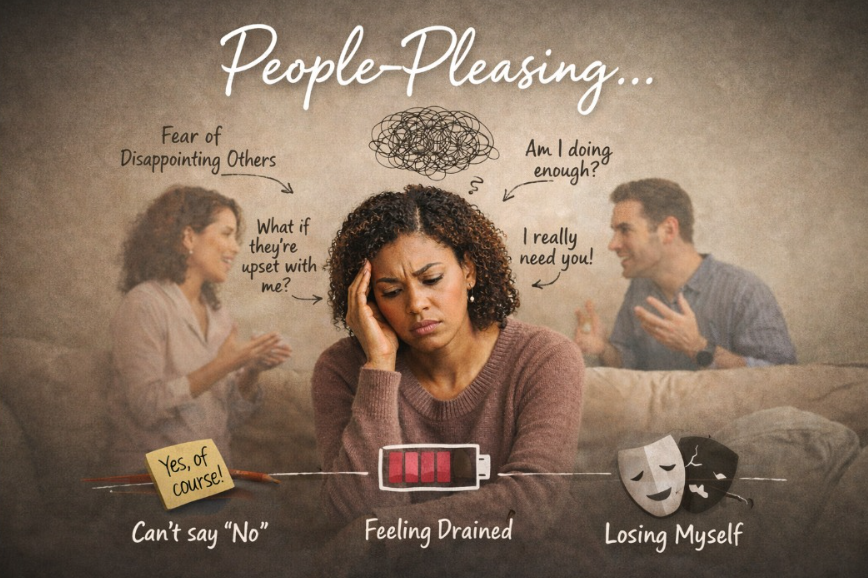
People-pleasing is often misunderstood as simply being kind or considerate, but it runs much deeper than that. It is a pattern rooted in the desire to be accepted, approved of, and valued—sometimes at the expense of your own needs, voice, and emotional well-being. It sounds like telling yourself, “I don’t want to upset anyone,” or “It’s easier if I just go along with it,” or even, “What will they think of me if I say no?”
At its core, people-pleasing is not about kindness alone, it is often connected to fear. Fear of rejection, fear of conflict, fear of disappointing others, and sometimes, fear of not being enough. For many individuals, this pattern begins long before adulthood. It often develops in environments where love or approval felt conditional, where being agreeable created safety, or where emotions were dismissed. Over time, these experiences can shape a belief system that quietly says, “My value comes from what I do for others, not who I am.” Without realizing it, this belief can follow someone into their relationships, work, and identity.
Signs & Symptoms of People-Pleasing
As people-pleasing becomes a pattern, it often shows up in ways that feel normal but can be emotionally draining. You may notice that saying no feels uncomfortable or even guilt-inducing, leading you to overcommit despite feeling overwhelmed. There may be a tendency to avoid conflict at all costs, seek reassurance from others, or feel responsible for managing other people’s emotions.
At times, you might apologize even when it is not necessary, suppress your thoughts to keep the peace, or adjust who you are to meet expectations. Over time, these patterns can create a quiet disconnection from your own needs, leaving you unsure of what you truly want or feel.
How People-Pleasing Impacts Your Life
People-pleasing can gradually shape the way you experience your relationships, family roles, and even your professional life. Within families, you may become “the strong one” or “the one who holds everything together,” often placing your own needs aside. In relationships, this pattern can lead to imbalanced dynamics where you give more than you receive, and where unspoken resentment quietly builds over time.
In work environments, people-pleasing may show up as difficulty advocating for yourself, taking on more responsibilities than you can manage, or feeling uncomfortable setting boundaries. Internally, it can begin to influence your self-perception, tying your worth to how much you do rather than who you are. You may find yourself questioning your identity and wondering, “Who am I beyond what I do for others?”
The Mental Health Impact
While people-pleasing may appear as strength on the outside, it often carries a significant emotional and mental load. Constantly prioritizing others can lead to burnout and emotional exhaustion, leaving you feeling drained and overwhelmed. Anxiety may develop around how others perceive you, and resentment can build when your own needs remain unmet.
Over time, this pattern can contribute to feelings of sadness or depression, especially when you begin to feel unseen or disconnected from yourself. Many individuals find themselves wearing a “happy face” outwardly while struggling internally, carrying emotions that have not been fully expressed or acknowledged.
Healing from People-Pleasing
Healing from people-pleasing is not about becoming distant or uncaring, it is about learning that you can be both compassionate and have boundaries. It is about recognizing that your needs, voice, and well-being matter just as much as anyone else’s.
This process begins with awareness. Taking time to notice when you are saying yes out of obligation rather than desire can be a powerful first step. It also involves gently exploring the fears that may arise when you consider choosing yourself. Healing is not about changing who you are. It is about returning to who you have always been, before you felt the need to earn your worth.
Coping Skills & Strategies
As you begin this journey, small, intentional steps can create meaningful change. Healing from people-pleasing is about learning to include yourself in the care you so freely give to others.
✓ Pause before you say yes
Give yourself space to check in: “Do I truly have the capacity and desire for this?”
✓ Practice saying no without over-explaining
A simple, respectful response is enough: “I’m not able to commit to that right now.”
✓ Check in with your needs daily
Ask yourself: “What do I need today—mentally, emotionally, physically?”
✓ Challenge guilt when it shows up
Guilt doesn’t always mean you’re doing something wrong—it may mean you’re doing something new and healthier.
✓ Set small, realistic boundaries
Start in one area. Small, consistent boundaries create lasting change.
Affirmation
“I am worthy of love, respect, and care—even when I am not giving, fixing, or doing for others. I choose to honor my needs without guilt.”
If you are in the Dallas/Plano area, LaTreece Ross Counseling Services offers both in-office and telehealth therapy sessions to support your healing journey.
Sometimes the most life-changing decision we make is choosing to care for our own well-being. Your healing journey is worth the investment.